From the journal
Island News Roundup: Deep-Sea Mining, Coastal Storms, Health Care, and Strategic Geography
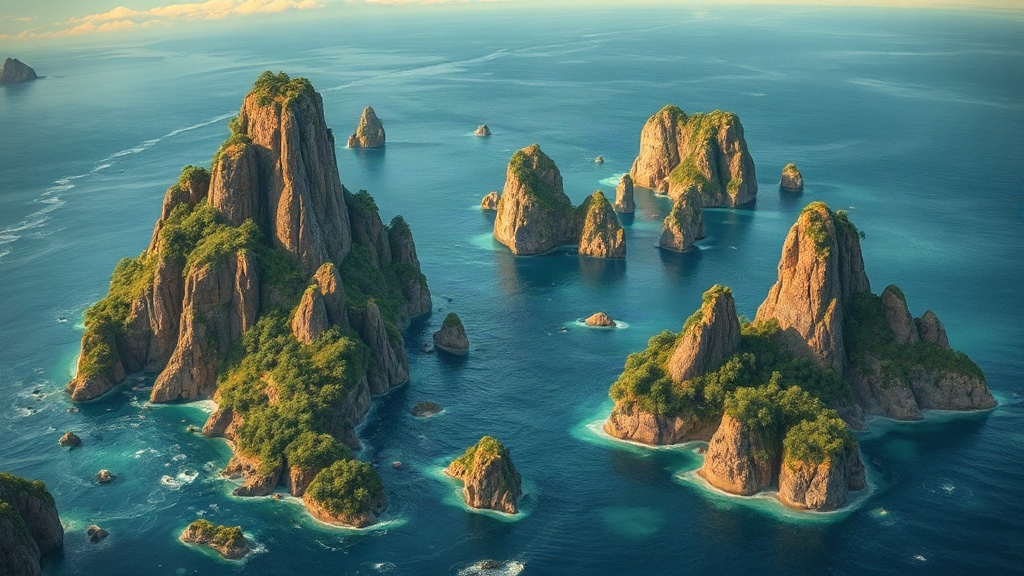
Islands have a way of landing in the headlines for very different reasons. Some are valued for what lies beneath their waters, some for the storms that batter their shores, and others for where they sit on the map. Taken together, the latest stories show how much weight small pieces of land carry in a connected world.
The Deep-Sea Mining Debate in the Pacific
Few topics are as divisive across the Pacific right now as seabed mining. Coverage this week describes island communities weighing the promise of a new resource boom against the risk of irreversible damage. The seafloor in parts of the Pacific holds polymetallic nodules rich in nickel, cobalt, manganese, and copper, the metals behind batteries, electric vehicles, and renewable energy infrastructure.
For small island economies with limited land and few export options, the appeal is easy to understand. Licensing fees, royalties, and jobs could reshape national budgets. But many scientists, fishers, and Indigenous leaders warn that deep-sea ecosystems are poorly understood and recover extremely slowly, if at all. Sediment plumes could travel far from extraction sites and affect tuna migration and the food webs that coastal communities depend on.
The central question is who decides, and on what evidence. Island nations want a seat at the table, along with strong environmental baselines, transparent revenue sharing, and the right to say no. The pace of the so-called gold rush matters as much as the destination.
Island Weather and Coastal Readiness
Not every island story is about the global economy. Catalina and the Santa Barbara Islands off the California coast are currently under a high surf advisory, a reminder that offshore communities live closer to the ocean's moods than most mainland residents.
Powerful swells can create dangerous rip currents, break over harbor walls, and make boat crossings risky. Visitors often underestimate them, particularly when skies are clear and the beach looks inviting. The basic guidance holds up well:
- Check marine forecasts before any ferry, kayak, or paddleboard outing. - Stay off jetties and rocky shorelines, where large waves can sweep people off their feet. - Never turn your back on the surf, especially while taking photos. - Follow local lifeguard and harbor patrol instructions.
As coastal weather grows more unpredictable, preparedness is becoming a normal part of island life.
Health Care Is the Quiet Foundation
Behind every thriving island community is a health system that works. The World Health Organization's recent focus on a stronger health workforce for healthier islands highlights a challenge that rarely makes dramatic headlines but shapes daily life. Small, remote populations struggle to recruit, train, and keep doctors, nurses, and allied health professionals.
Distance adds cost and complexity. A single specialist may serve several islands, and a medical evacuation can depend on weather and flight schedules. Island health leaders are therefore investing in locally trained staff, telehealth, and regional cooperation so that skills and resources can be shared across borders. Retention is as important as recruitment: professionals stay when they have fair pay, support, and chances to grow.
Strategic Geography and Global Attention
Islands also matter because of where they sit. Recent analysis of military action around Iran's Qeshm Island has drawn attention to how islands near critical shipping lanes can become focal points in regional tensions. Qeshm lies in the Strait of Hormuz, one of the world's most important energy corridors, so any disruption there ripples through oil markets and global supply chains.
The pattern is familiar. Whether the setting is the Gulf, the South China Sea, or the open Pacific, geography gives small territories outsized influence.
What These Stories Share
Resources, climate, health, and security might seem unrelated, but they converge on the same theme: islands are on the front line of decisions made far from their shores. The communities that live there are rarely asking for attention for its own sake. They want a voice in how their waters, workforces, and futures are managed.
Travelers, investors, and policymakers can help by listening first. The most durable island strategies tend to start with local knowledge, put long-term resilience ahead of quick returns, and treat the ocean as a shared inheritance rather than an open vault.